
Bayonne Historical Directory Holdings
Bayonne's historical directory shelf is distributed among the New Jersey State Library catalog, the Bayonne Public Library, digitized scans, and an independent local research collection. The cataloged series is not a single unbroken run. It begins with the 1879–80 General Directory and Manual of the City of Bayonne, then returns in selected years through the 1951 Price & Lee volume. The most dependable approach is to record the exact issue that is available, rather than assume that every intervening year exists.
| Collection | Years | Where Held | Access |
|---|---|---|---|
| Cataloged Bayonne directories | 1879–80; 1888–93; 1895–99; 1901–07; 1911; 1914–15; 1938; 1951 | New Jersey State Library catalog and Bayonne Public Library reels | Reference, microfilm, or cataloged collection; exact runs vary |
| Digitized Bayonne directories | 1918; 1922–23 | DigiFind-It city-directory archive | Web PDF scans |
| Telephone directories | 1930; 1945–46; 1947–47 as cataloged | Bayonne History holdings and library lead | Ask the reference researcher; a complete scan run was not verified |
| Companion local-history collections | Obituaries 1960–2002; selected yearbooks and census reels | Bayonne Public Library reference and archives | Reference desk, non-circulating archives, or in-library databases |
The historical shelf extends beyond printed directories. The library identifies maps, photographs, postcards, veteran oral histories, yearbooks, local clippings, and census microfilm as local-history collections. Those companions help when a surname is absent from an available directory year, but they should be cited by their own date and collection rather than folded into the directory record.
Note: An unlisted directory year is a collection gap until a librarian, catalog, or scanned volume confirms otherwise.
Bayonne Directory Publishers
The publisher names are useful search terms. Reel 1 includes Bayonne Printing Co., Wanton S. Webb, Geo. E. Allen, and Moutier & Wand. Reel 2 continues Wand Directory Co. and adds Parker's 1911 directory and the 1914–15 General Directories Co. volume. Later catalog entries include the 1938 Classified Business Directory and Street Guide and the 1951 Price & Lee directory. This named publisher spine is stronger evidence than calling all of the volumes a generic Polk series.
- 1879–80: General Directory and Manual of the City of Bayonne, issued by Bayonne Printing Co.
- 1888–93: Webb's Bayonne City Directory appears in the cataloged run.
- 1895–1907: Allen, Moutier & Wand, and Wand issues appear on the first two library reels.
- 1911 and 1914–15: Parker's and General Directories Co. volumes provide later early-century snapshots.
- 1938 and 1951: the classified street guide and Price & Lee directory are the later cataloged issues.
The Bayonne History research holdings list municipal and telephone directories, yearbooks, books, and local genealogy material. That organization is an independent research service, not a city or historical-society office. Its public holdings list can point a researcher toward 1899 and 1903 Bayonne volumes, a 1930 Northern New Jersey telephone directory, and listed Hudson County telephone directories.
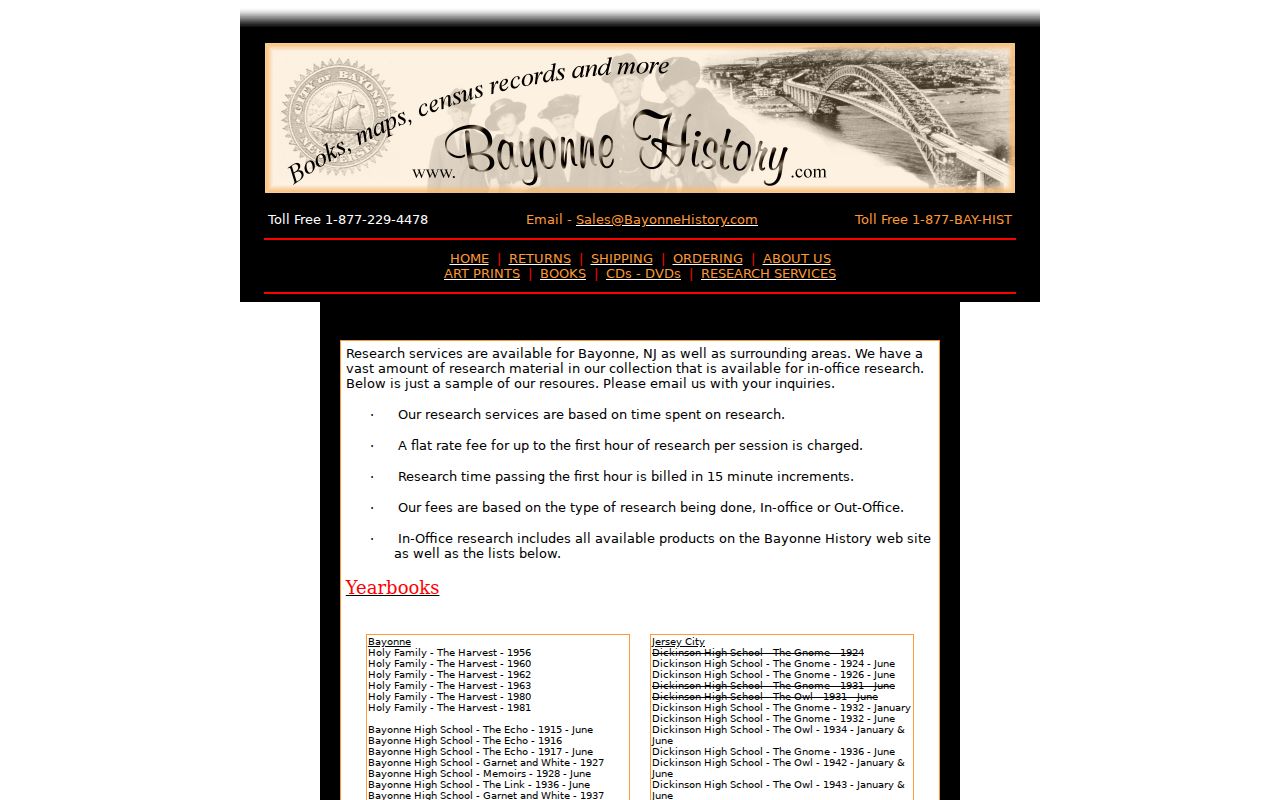
The holdings screen is a useful lead, but access terms and any research charge should be confirmed directly with the independent service. It does not establish a continuous telephone or reverse-directory run.
Bayonne Directory Reference Routes
Bayonne Public Library Reference expressly identifies city directories, digitized resident obituaries, old maps, photographs, postcards, military history, and oral history. Ask the reference desk for a surname, street, year, or collection. That question gives staff enough detail to locate a reel, a reference item, or a finding aid without treating the catalog as proof that every item has been digitized.
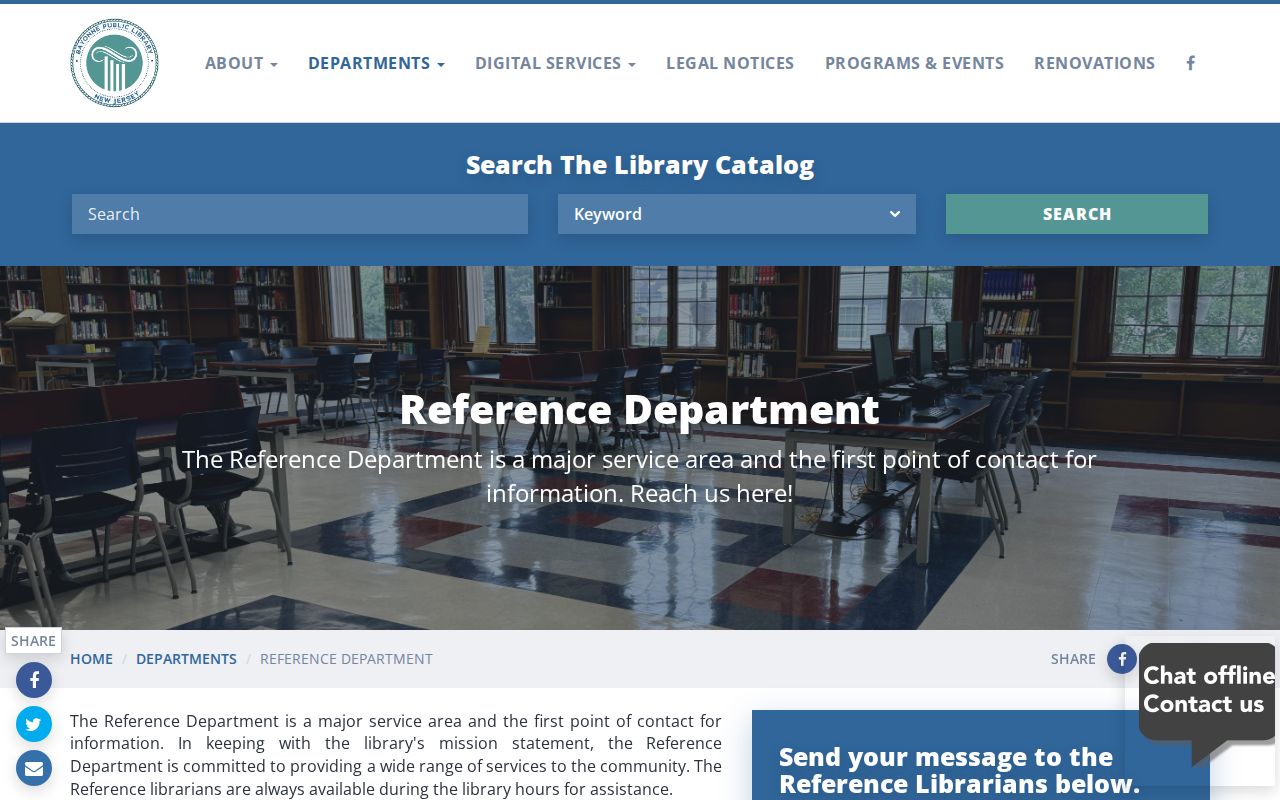
The reference route also connects a directory search to obituary and map material when a person disappears between issues. The library's databases include in-library access to Ancestry Library Edition, FamilySearch Affiliate collections, HeritageHub, HeritageQuest, and digitized local newspapers.
The Bayonne Library archives are non-circulating and keep a finding aid or descriptive inventory at the reference desk. Their named groups include yearbooks, New Jersey census microfilm, historical photographs, oral history, military history, and local newspaper clippings.

Archive access is therefore a second channel when an online scan fails. It is also the better place to ask whether a related yearbook, clipping, or photograph survives for a particular household.
The library names the Bayonne Times, Bayonne Evening News, Bayonne Herald and Greenville Register, Bayonne Evening Review, Bayonne Review, Bayonne Public Opinion, Bayonne Herald and Burger Zeitung, Bayonne Facts, and Jersey Journal among its local newspaper resources. Most of that local coverage is listed from 1867 into the late 1970s, while the Jersey Journal is listed through its 2025 closure. The named newspapers are an in-library route, so a reference request can pair a directory address with a publication date and page.
Reading Bayonne Directory Entries
A scanned 1918 R.L. Polk & Co. volume shows the basic entry pattern: surname or headword, given name and sometimes middle initial, spouse in parentheses, occupation or employer description, and a home address. It also uses compact marks. “h” identifies home, “r” is a residence marker, and “wid” identifies a widow. Those marks are household clues, not a deed, title, or ownership determination.
| Name | Surname or headword, given name, and sometimes a middle initial or spouse in parentheses. |
|---|---|
| Occupation | Work, employer, or occupational description, which can distinguish people sharing a name. |
| Address | Home street and number, often alongside a page or street-guide context. |
| Residence marks | “h” means home and “r” is a residence marker; neither proves legal ownership. |
| Widow notation | “wid” signals widowhood and can help separate a later household from an earlier married entry. |
- Criss-cross directory
- An address- or street-ordered directory section. A complete Bayonne criss-cross scan was not verified, so do not assume one exists for every year.
- Householder index
- An index organized around the person or household named at an address, rather than a modern proof of ownership.
- Abbreviation key
- The volume's explanation of shortened terms. Capture it before interpreting “h,” “r,” “wid,” or a work abbreviation.
The digitized 1922–23 volume adds civic, street, and fire-alarm material alongside residential pages. A directory is strongest when its page, year, exact spelling, address, and the notation used are recorded together.
Do not expand a short entry into facts the volume does not supply. A spouse in parentheses can help distinguish a household, and an occupation can distinguish same-name people, but neither resolves legal ownership or a person's later location. Move to the record keeper that holds that different question.
Bayonne Directories and Waterfront Work
Bayonne's port, rail, refinery, canal, and terminal history gives context to the occupations in historic directories. The 1918 scan includes entries for city and fire personnel, vessel workers, clergy, and trucking. A vessel captain, boatman, refinery, rail, fire, or city description can be a useful local clue, but it still identifies an entry at a particular time, not a full biography.
Constable Hook, Bergen Point, Centerville, Pamrapo, and Saltersville are also worthwhile historical place-name searches. A modern street or parcel can sit in a different industrial and geographic setting from the one described in an old directory or map.
Tracing Bayonne Directory Households
Use one Bayonne directory entry as the start of a documented sequence. Normalize the street spelling, number, direction, and older place name. Then search the surname in the closest available issue and, where a street guide is present, use the address pages to test the household. A missing name can reflect a move, a changed household, an indexing error, a publication gap, or different street coverage. It does not by itself show why a person disappeared.
- Record the first located year, page, name spelling, spouse or “wid” notation, occupation, and address.
- Compare the nearest earlier and later directory issues, preserving changes in address, work, and household wording.
- Pair the 1911, 1914–15, 1918, or 1922–23 directory evidence with the closest census schedule rather than treating the two sources as the same date.
- Use the library's obituary, newspaper, yearbook, or map resources for a dated follow-up when the directory trail ends.
- For a property question, confirm ownership through tax or deed material; a directory residence mark alone is not enough.
When the task changes from a historic household to a current person, a name should be anchored with independent attributes such as an address, date, relationship, or record venue. The Bayonne resident lookup approach is built around that one-person verification step rather than a historical shelf search.
Note: Keep a dated source note for each entry because a directory and a census can describe the same family at different moments.
Bayonne Directory Census Partners
Bayonne Library holds local New Jersey census microfilm for Bayonne in 1870, 1880, 1885, 1895, 1900, 1905, 1910, and 1915, plus Hudson County federal reels for 1920 and 1930. Census age, relationship, and occupation can corroborate a directory name and address. They are not interchangeable snapshots, since the census date and directory publication date may be months or years apart.
For later family context, the library's digitized obituaries cover 1960–2002, and HeritageHub offers obituary images from 1704 to the present through the library. Local newspapers are chiefly an in-library route, with listed titles running mostly from 1867 into the late 1970s and the Jersey Journal listed through its 2025 closure.
Read the reel description before assuming that “Hudson County” includes every Bayonne ward in one image sequence. The library's holdings mix state-census and federal-census reels, and ward or municipal coverage differs by reel. A precise reel, year, page, and household notation makes the comparison reproducible.
Bayonne Library's Surviving Record Shelf
The library's local-history holdings have a real preservation context. Its Carnegie building was gutted by fire on Memorial Day in 1959, then restored and reopened in 1963. A missing yearbook, clipping, or directory lead may therefore be a survival or collection issue, not evidence that the person was absent from Bayonne.
The documented directory sequence, from 1879–80 through the cataloged 1951 issue, also has visible gaps. A final printed year and a complete reverse-directory run were not located in official sources. Ask for the actual reel or scan, and preserve the source path with the household notes.